Term Dates

Term Dates 2025/2026
| School Breaks Up | School Re-Opens | |
| Return to School | Wednesday 3rd September 2025 | |
| Autumn Half Term | Thursday 23rd October 2025 | Monday 3rd November 2025 |
| Christmas Holidays | Friday 19th December 2025 | |
| Return to School | Monday 5th January 2026 | |
| Spring Half Term | Friday 13th February 2026 | Monday 23rd February 2026 |
| Easter Holidays | Friday 27th March 2026 | |
| Return to School | Monday 13th April 2026 | |
| May Day | Friday 1st May 2026 | Tuesday 5th May 2026 |
| Summer Half Term | Thursday 21st May 2026 | Monday 1st June 2026 |
| Summer Holiday | Friday 17th July 2026 |
Training Days and Bank Holidays
- Monday 1st September 2025
- Tuesday 2nd September 2025
- Friday 24th October 2025 (SYMAT Schools)
- Early May Bank Holiday – Monday 4th May 2026
- Friday 22nd May 2026
- Monday 20th July 2026
Term Dates 2026/2027
| School Breaks Up | School Re-Opens | |
| Return to School | Wednesday 9th September 2026 | |
| Autumn Half Term | Thursday 22nd October 2026 | Monday 2nd November 2026 |
| Christmas Holidays | Friday 18th December 2026 | |
| Return to School | Monday 4th January 2027 | |
| Spring Half Term | Friday 5th February 2027 | Monday 15th February 2027 |
| Easter Holidays | Friday 19th March 2027 | |
| Return to School | Monday 5th April 2027 | |
| May Day | Friday 30th April 2027 | Tuesday 4th May 2027 |
| Spring Half Term | Thursday 27th May 2027 | Monday 7th June 2027 |
| Easter Holidays | Friday 23rd July 2027 |
Training Days
- Monday 7th September 2026
- Tuesday 8th September 2026
- Friday 23rd October 2026 (YLT Schools)
- Early May Bank Holiday – Monday 3rd May 2027
- Friday 28th May 2027
- Monday 26th July 2027
Admissions
Archbishop of York’s Church of England Junior School is part of Yorkshire Learning Trust (YLT), which is the admission authority for this school.
Applications are processed by the admissions team at the City of York Council.
If you need any support in accessing school admissions please contact the admin team at the school, who can help guide you through the process.
Admission Arrangements for September 2027
The admissions arrangements for the 2027-28 academic year have now been formally determined by the Trust Board. These arrangements set out how many children will be admitted to the school and the criteria used to allocate places if there are more applications than places available.
Admissions for 2026/27 and 2025/26
Published Admissions Number (PAN)
The Published Admission Number (PAN) is the number of pupils it is intended to admit into the first year group of school (Year 3). The PAN is the maximum number of pupils that the admission authority will admit to each year group.
Academic Year | 2025-2026 | 2026-2027 | 2027-2028 |
Published Admission Number | 45 | 45 | 45 |
Further information regarding September admissions, in-year admissions, and appeals can be found on the Trust website.
How to Apply
Applications are processed by the Local Authority, City of York Council. Your application must be made to the local authority in which you live, that you currently pay your council tax to, even if your school of preference is not in that area. You apply through your local council even if you’re applying for schools in another council area, then they will forward your application to the relevant local authority – in our case, City of York Council.
If your child attends an infant school you will need to apply for a place in a school from Year 3 – Year 6.
If you would like to apply for a place at a Archbishop York Junior School from Year 3 you should do so by 15th January when your child is in Year 2.
In-year Admissions
If you are moving into or across the York area, or you are simply requesting a change of school, this type of school admission is called an in-year transfer. The City of York Admissions team also coordinate requests for in-year admissions and you can read more about the process on the CYC website.
Applying for a place in junior school
How do I apply?
You can apply online at york.gov.uk/admissions from 12 September 2025.
With an online application you will receive an email confirming submission of your application.
Please remember to submit your application by the closing date.
If you have difficulty applying online, you can contact the Admissions Team at City of York Council on 01904 551554 and they can talk you through how to apply. If you can’t apply online you can request a paper Junior Application Form by calling 01904 551554. Forms are also distributed to infant and junior schools in the York area.
You need to ensure that you have applied, either online (and submitted your application), or by returning a Junior Application Form by the deadline of 15th January 2026.
What happens if I don’t apply on time?
The Admissions Team will start to process all applications on 15th January 2026 so if you do not apply by this date your application may be dealt with after all the other applications that were received on or before the application deadline. This means you will stand less chance of getting your preferred school and may be allocated one some distance from your address.
When is National Offer Day?
National Offer Day is 16th April 2026 or the next working day. Those applicants that applied online can check their allocation online on the morning of National Offer Day. You will need your username and password to log on. You will also receive an allocation email/letter on National Offer Day.
Key Dates for the ‘Junior Round’
» 15th Jan 2026 – Deadline for applications
» 16th April 2026 or next working day – National Offer Day
» 15th May 2026 – Appeal forms to be returned
» June – July 2026 – Admission appeals heard
If you are looking for a Reception place at the infant school for your child (who is four or will turn four by the 31st August) please see their website for information here.
Admissions Consultations
Consultation on Yorkshire Learning Trust (CYC) schools’ admission arrangements 2027/28
Schools have a statutory duty to consult on admission arrangements every 7 years or when making changes to their admission arrangements. Yorkshire Learning Trust (YLT) carried out a consultation on the admission arrangements for its schools in the City of York local authority area for the 2027-28 school year which was open between 20th October 2025 and 3rd December 2025. During this period, the views of parents/carers, schools, staff, neighbouring authorities and other interested parties were sought.
Following this period of consultation, the admission arrangements were considered by the YLT Trust Board alongside any comments made. The admission arrangements have now been formally set or “determined”; the determined policies can now be found above, and on the YLT website.
CYC Coordinated School Admissions Consultation 2027 to 2028
In line with the School Admissions Code 2021, City of York Council hold a coordinated admission consultation on behalf of schools within York for whom City of York Council are the admission authority and some Multi Academy Trusts with schools in York.
The consultation was open from Wednesday 8th October to Friday 21st November 2025. This consultation has now closed. Click here for further information about the 2027-2028 CYC Coordinated Admissions Consultation.
You can find more information and documents regarding school admissions on the Local Authority website.
Ofsted/SIAMS

Ofsted
We are very proud of being a ‘Good‘ school in all areas. Our last inspection was done in October 25th and 26th 2023.
Ofsted letter from our Headteacher and Chair of Governors
Archbishop of York’s Church of England School’s Ofsted Reports on the Ofsted website
SIAMS Reports
All Church of England dioceses and the Methodist Church use the Church of England Education Office’s framework for the Statutory Inspection of Anglican and Methodist Schools (SIAMS) under Section 48 of the Education Act 2005. The SIAMS Evaluation Schedule sets out the expectations for the conduct of the Statutory Inspection of Anglican, Methodist and ecumenical Schools under Section 48 of the Education Act 2005.
AYJS was awarded the J1 Judgement which means that the inspection findings indicate that the school is living up to its foundation as a Church school.
KS2 Results
Performance Tables
To view the Performance Tables for primary, secondary and special needs schools and colleges and check their performance please visit School Performance Tables. To view our Performance Table visit AYJS Performance Table.
National Curriculum tests (SATs)
At the end of KS2, the children in Year 6 will all receive a scaled score. It will be reported as the formal outcome of tests in Maths, Reading and Grammar, Spelling and Punctuation. This is in the form of a percentile rank so parents and teachers know exactly where they stand against their peers. The scores that children can record will range from 80 to 120. One hundred (100) is the middle point and is considered to be the National ‘Expected Standard’. Therefore, any child achieving 100 or more is working at or above the national expected standard. Children recording scaled scores between 110 and 120 will be classed as performing at a High Standard.
Writing at the end of KS2 is Teacher Assessed. Children will be recorded at one of three stages:
- Working towards the Expected Standard
- Working at the Expected Standard
- Working at Greater Depth
Pupil Premium
Pupil Premium Spend – Information for Parents
The pupil premium is additional funding given to publicly funded schools in England to raise the attainment of disadvantaged pupils and close the gap between them and their peers.
Pupil premium funding is available to both mainstream and non-mainstream schools, such as special schools and pupil referral units. It is paid to schools according to the number of pupils who have been:
- registered as eligible for free school meals at any point in the last 6 years
- been in care for 6 months or longer
If you feel you may be eligible for Free School Meals, but have not claimed them, please contact us via the School Office, as Pupil Premium makes a real difference to the opportunities we can give to pupils at Archbishop of York’s CE Junior School. Please also see our Pupil Premium/Free School Meal page for further information.
- £1,480 for each eligible primary-aged pupil
- adopted from care or have left care
- looked after by the local authority children
Accountability
Headteachers and school governing bodies are accountable for the impact of pupil premium funding in the following ways:
- performance tables, which show the learning and progress of disadvantaged pupils as shown by outcomes data
- requiring schools to publish a statement online each year with the level of pupil premium funding received by the school, how they use it and the impact it has on the attainment of disadvantaged pupils.
- the Ofsted inspection framework, where inspectors focus on the attainment of pupil groups, and in particular those who attract the pupil premium
Key principles how the pupil premium is spent at AYJS:
- AYJS aims to raise achievement for pupils who are eligible for Pupil Premium to at least the level of their peers. The school is aware that this means that some of these pupils must make faster progress than non-eligible pupils and is determined to achieve this.
- AYJS never confuses eligible pupils with low ability and strives to ‘bring out the best’ in this group of pupils and support them to achieve the highest levels.
- AYJS creates an overall package of support aimed to tackle the range of barriers including: attendance, behaviour, external factors, professional development focusing on improving outcomes for eligible pupils, improving the quality of teaching and learning, language acquisition, parental engagement, opportunities for first-hand experiences and development of literacy and numeracy skills.
- AYJS uses assessment systems to track and enable thorough analysis of data (Reading, Writing and Maths) to identify pupils who are under achieving and why.
- AYJS directs resources and interventions to accelerate progress of eligible pupils and close the attainment gap compared to their peers.
- AYJS uses data to carefully track the impact of targeted spending (interventions, projects or pedagogy) on attainment and progress of eligible pupils.
- The Headteacher and Pupil Premium Leader have a clear overview of how funding is allocated and the difference it is making to the outcomes of pupils termly.
- AYJS ensures class teachers, phase leaders and subject leaders know which pupils are eligible for Pupil Premium so they can take responsibility for accelerating progress and accountability is shared across the school.
- The Governing Body is ambitious for pupils and closely monitors the school’s effectiveness in closing the gap between different groups of pupils.
- As specified in the school Charging and Remissions policy, we will fund participation in school visits and extra-curricular activities for Pupil Premium pupils when appropriate.
The next pupil premium strategy review will be in 2025-2026.
Sports Premium
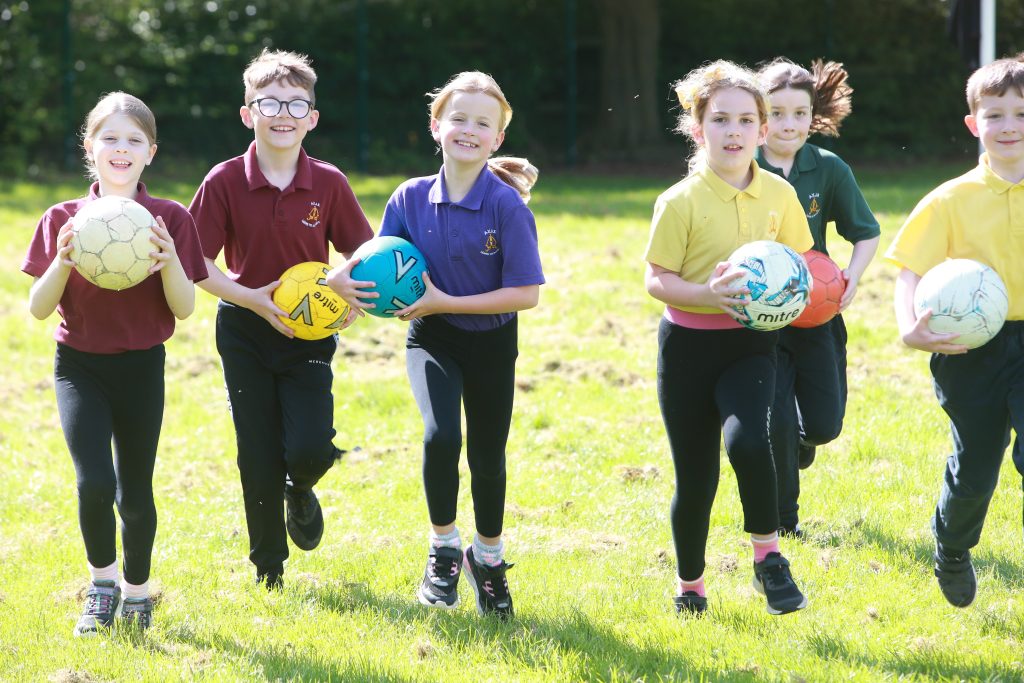
What is Sports Premium Funding?
The government has provided funding of £320 million per annum to provide new and substantial primary school sport funding. The funding is being jointly provided by the Departments for Education, Health and Culture, Media and Sport, and will see money going directly to primary school Head teachers to spend on improving the quality of sport and PE for all their children. Each school receives £16,000 plus an extra £10 per pupil each year. We received £18,490. Money can only be spent on sport and PE provision in schools. The money will be used so that all children benefit regardless of their sporting ability.
Purpose of the funding
All schools have to spend the sport funding on improving their provision of PE and sport, but there is freedom to choose how we do it. At AYJS we recognise the contribution of PE to the health and well-being of the children. In addition, we believe that an innovative and varied PE curriculum and extra-curricular opportunities have a positive influence on the concentration, attitude and academic achievement of all children. Therefore we have prioritised our spending into two main areas:
- Continue all teaching staffs development across PE.
- Renew necessary resources for curriculum and extra-curriculum use.
- Enhance the variety of sporting opportunity for all children
Sustainability of School Sport at AYJS
We believe that it is essential to deliver to the children of AYJS, a wide variety of opportunities inside and outside the curriculum. These are provided by our enthusiastic and expert staff and also the numerous and various expert outside providers, with whom we have excellent links.
We recognise that these groups of people give our children and staff additional knowledge and expertise in sports and games which the school in isolation could not provide. They also deliver to the staff additional CPD and therefore the tools and skills to provide the teaching of these areas in the future. The crucial thing is that our children benefit, find it memorable and continue to be active and enthusiastic participants in Sport for their lifetime.
With all this in mind, we reach out into our community and receive support from various people and groups.
Sports Premium Funding Documents
Policies
For our current policies, please select the appropriate link below. If you would like paper copies of any of these documents, please contact the school office, who would be happy to assist you. These will be provided free of charge to parents.
In September 2025 we became part of the Yorkshire Learning Trust.
Trust Policies and Documents
Archbishop of York Junior School has adopted the following YLT policies and Privacy Notices which can be viewed on the YLT website.
- Charging and Remissions Policy
- Complaints Policy
- Data Protection Policy
- Educational Visits Policy
- Equalities
- First Aid
- Health & Safety Policy
- Remote Learning Policy
- Special Educational Needs and Disabilities Policy
- Stakeholder Behaviour and Parent Code of Conduct
- Supporting Children with Medical Conditions
- Suspensions and Permanent Exclusions
- Whistleblowing Policy
Privacy Notices (please see under ‘Data Protection’ on the YLT website):
- Alumni
- Child Friendly
- General
- Governors, Trustees and Volunteers
- Pupils and Parents and Guardians
- Website
- Workforce
In addition to the information on our school website, please also see the YLT website for overarching policies in relation to:
- Accessibility
- Admissions arrangements
- Child Protection and Safeguarding Policy
Additional policies and documents in relation to finance and HR matters are also available on the YLT website
School Policies and Documents
Admissions
- Admission Arrangements (including Policies and PANs) for Archbishop of York’s Church of England Junior School
- Yorkshire Learning Trust Admissions Information (external link to the YLT website, please see under ‘Admissions’)
- Apply for a school place use link https://www.york.gov.uk/SchoolAdmissions
Attendance
- AYJS Attendance Policy (January 2026)
- For more information, including forms relating to attendance and absence, please see the Attendance section.
Behaviour
- AYJS Positive Behaviour Policy (June 2025)
- AYJS Anti-bullying Policy (June 2025)
- Collective Worship Policy (June 2024)
- Complaints Procedure and Policy – please see under ‘Key Policies’ on the YLT website
- Parental Code of Conduct (found within the YLT policies page)
Charging and Remissions Policy
Curriculum, Teaching and Learning
- PSHE (including Relationship & Sex Education) Policy (Apr 2024)
- Religious Education Policy (June 2024)
- Remote Learning Policy – please see under ‘Key Policies’ on the YLT website
Educational Visits
E-Safety and Online Safety
Equality
Health & Safety
- Lettings Policy – please view on Appendix 8 of Financial Handbook
Medical
- Supporting Pupils with Medical Conditions (please see YLT policies)
- AYJS Allergens Policy (2025-26)
Privacy Notices
- Please see under Data Protection and Online Safety on the YLT website
Safeguarding
- Child Protection and Safeguarding Policy – under ‘Key Policies’ on the YLT website
- ‘Keeping Children Safe in Education’ (external link to gov.uk website)
- City of York Safeguarding Partnership (external link to Safer Children York website)
- Separated Parents Policy – AYJS June 2025
School Uniform
SEND (Special Educational Needs and Disabilities)
- Accessibility Policy – AYJS June 2025
- York Local Offer for SEND (external link)
Volunteers in School
- Guidelines – coming soon
Whistleblowing
SEND

Archbishop of York’s CE Junior School welcomes all children and values them as individuals, treating them equally and with respect. We believe that all children have the right to have their own particular needs recognised and addressed in order to achieve success.
We take our duty to provide equal opportunities for every person in our care very seriously.Through an open culture of respect and self-belief, we aim to deliver the highest possible quality of education for all pupils based on a foundation of Christian values and practice. We are committed to ensuring that all children, including those identified as having a special educational need or disability, have a common entitlement to an accessible, broad and balanced academic and social curriculum and are fully included in all aspects of school life. We value each child and encourage them to achieve the best possible outcomes enabling them to be confident and successful as they continue their lifelong learning.
We endeavour to raise the aspirations and expectations of all pupils, including those with SEND, by working collaboratively with parents and carers and listening to the voice of the pupil.
Send Information Report
Our SEND Information Report helps parents/carers understand how the school applies its SEN Policy in practice. It includes information about the provision and support for children with special educational needs and disabilities (SEND).
Key contact for school: Zita Ferencz Clarke (SENDCo) who can be contacted via the school office.
SEN Complaints Procedure
For complaints by a parent or carer of children with special educational needs or disabilities, please see the information in the SEND Information Report above, and read through our ‘Complaints Policy’ document which can be found on our the Policies section of our website.
Local Offer Website
Safeguarding
Safeguarding Policy
A link to the Trust Child Protection and Safeguarding Policy can be found, together with other policies relating to Safeguarding, in the Policies section of our website.
Reporting Concerns
If you are concerned about the welfare of a pupil at any of our schools contact the Designated Safeguarding Officer in each school. Details can be found in the Trust Policy and on each school website.
Trustees are responsible for safeguarding, even if certain aspects of the work are delegated to staff. Trustees must make a clear commitment to safeguarding and publish the safeguarding statement stating that failure to follow the statement will be dealt with as a very serious matter.
Key contacts for the School:
| Designated Safeguarding Lead (Executive Headteacher) | Kerry Davies |
| Deputy Designated Safeguarding Lead | Claire Savage |
| Nominated Governor for Safeguarding | Jane Flint |
Attendance
- For the AYJS Attendance Policy, please see the Policies section of our website
- AYJS Absence Request Form – Appendix 1
- AYJS Medical Appointment Form – Appendix 2
- AYJS Unauthorised Holiday Less than 10 sessions – Appendix 3
- AYJS Unauthorised Holiday 10 sessions or more – Appendix 4
- AYJS Termly Attendance Letter to Parents – Appendix 5
Computing

Online Safety
Please have a look at our comprehensive Internet Safety page.
Policies
Please take time to read through our Internet and ICT Acceptable Use Policy (Pupils), Online Safety (formerly E-Safety) and Privacy policies on our Policies page.
GDPR: In May 2018, the General Data Protection Regulation (GDPR) came into action. As a school, we take the data of your children very seriously. We ensure that any online educational resources we use are all GDPR compliant. For further information please see our Policies page.
Internet Access and G Suite for Educational Access for Pupils
As part of the school’s curriculum, we offer pupils supervised access to the Internet which we believe is an integral part of our learning environment.
Computing aims to prepare pupils to participate effectively in a rapidly changing world in which work and other activities are increasingly transformed by access to developing technology including the Internet. With this in mind, we use the services of Vital York Limited to ensure we have a secure learning intranet for our pupils and staff. Vital York Limited provide children with Google accounts which have a high level of security and are closely monitored.
Pupils use their accounts to access G Suite for Education. This is a set of productivity tools from Google including Gmail, Calendar, Docs, Slides and Classroom. Pupils will use their G Suite accounts to complete assignments, communicate with their teachers, sign into their Chromebooks and learn 21st century digital citizenship skills. The pupils’ Gmail communication is for internal use only and cannot be shared with external email accounts.
Assignments are set by teachers using Google Classroom and all pupils’ work is stored with Google Cloud. Pupils can log in to their Google accounts at home using the same login as at school. Both G Suite for Education and Gmail are encrypted and have strict privacy policies. Please see their GDPR statement for further information.
We have been using G Suite for Education for a few years now and truly believe that the benefits to pupils from access to the Internet and the use of the G Suite tools, in the form of information resources and opportunities for collaboration, exceed any disadvantages. During school time, teachers will guide pupils towards appropriate material. Obviously at home, families bear the same responsibility for guidance as they exercise with other information sources such as television, telephone, films and radio.
Other Online Tools used at AYJS
We will sometimes use or trial different online tools. These tools may require your child to have a login that require us to store pupils’ names, usernames and their work. Below is a list of tools that we currently use in school:
- Code.org – coding. Privacy
- Seesaw is an online platform for student engagement. GDPR
- Times Table Rockstars – Games aimed at boosting times tables knowledge and recall. GDPR
SPAG Monsters – an online learning tool that supports children to develop their spelling, punctuation and grammar skills. GDPR
School Music Development Plan
Please see details of the school’s summary of the School Music Development Plan. It sets out how the school will deliver high-quality music provision in curriculum music, co-curricular music and musical experiences, taking into account the key features in the national plan for music education.